Vitamin E
- Ohio State University. (2013, March 14). How vitamin E can help prevent cancer. ScienceDaily.
https://www.sciencedaily.com/releases/2013/03/130314175659.htm
- Harvard School of Public Health (2019). Vitamin E supplements might lower the risk of advanced prostate cancer in smokers.
https://www.hsph.harvard.edu/nutritionsource/vitamin-e/
Vitamin B6
- Norton, A. (2009, September 22). Vitamin B6 tied to better prostate cancer survival, Reuters.
https://www.reuters.com/article/us-vitamin-b6/vitamin-b6-tied-to-better-prostate-cancer-survival-idUSTRE58L3MD20090922
- Mocellin, S., Briarava, M., & Pilati, P. (2017, March). Epidemiological evidence supports the potential of vitamin B6 as a cancer risk reduction agent”, JNCI: Journal of the National Cancer Institute, 109(3).
https://academic.oup.com/jnci/article/109/3/djw230/2572054
Zinc
- Costello, L.C. & Franklin, R.B. (2016). A comprehensive review of the role of zinc in normal prostate function and metabolism; and its implications in prostate cancer. Arch Biochem Biophys, 611:100-112.
https://www.ncbi.nlm.nih.gov/pubmed/27132038
- “Franklin, R.B. & Costello, L.C. (2007, July 15). Zinc as an anti-tumor agent in prostate cancer and in other cancers. Arch Biochem Biophys, 463(2):211-7.
https://www.ncbi.nlm.nih.gov/pubmed/17400177
Copper
- Denoyer, D., Pearson, H.B., Clatworthy, S.A.S., Smith, Z.M., Francis, P.S., Llanos, R.M., Volitakis, I., Phillips, W.A., Meggyesy, P.M., Masaldan, S., & Cater, M.A. (2016). Copper as a target for prostate cancer therapeutics: copper-ionophore pharmacology and altering systemic copper distribution. Oncotarget, 7(24): 37064–37080. doi: 10.18632/oncotarget.9245
https://www.ncbi.nlm.nih.gov/pmc/articles/PMC5095059/
Selenium
- Charnow, J.A. (2016, August 10). Selenium May Cut Aggressive Prostate Cancer Risk. Renal & Urology News.
- Vinceti, M., Dennert, G., Crespi, C.M., Zwahlen, M., Brinkman, M., Zeegers, M.P.A., Horneber, M., D'Amico, R., & Del Giovane, C. (2018). Selenium for preventing cancer. Cochrane Database Syst Rev(3):CD005195. doi: 10.1002/14651858.CD005195.pub3
https://www.ncbi.nlm.nih.gov/pubmed/24683040
Saw Palmetto
- Gordon, A.E., & Shaughnessy, A.F. (2003). Saw Palmetto for Prostate Disorders. Am Fam Physician, 67(06):12-81-1283.
https://www.aafp.org/afp/2003/0315/p1281.html
- Bent, S. Kane, C., Shinohara, K., Neuhaus, J., Hudes, E.S., Goldberg, H., & Avins, A.L. (2006). Saw Palmetto for Benign Prostatic Hyperplasia. N Engl J Med, 354: 557-566. doi: 10.1056/NEJMoa053085
https://www.nejm.org/doi/full/10.1056/NEJMoa053085
Plant Sterol Complex (Beta-sitosterol)
- Wilt, T.J., MacDonald, R., & Ishani, A. (1999). beta-sitosterol for the treatment of benign prostatic hyperplasia: a systematic review. BJU Int, 83(9): 976-83. doi: 10.1046/j.1464-410x.1999.00026.x.
https://www.ncbi.nlm.nih.gov/pubmed/10368239
Pygeum africanum
- “Shenouda, N.S., Sakla, M.S., Newton, L.G., Besch-Williford, C., Greenberg, N.M., Macdonald, R.S., & Lubahn, D.B. (2007). Phytosterol Pygeum africanum regulates prostate cancer in vitro and in vivo. Endocrine, 31:72-81. doi: 10.1007/s12020-007-0014-y.
https://link.springer.com/article/10.1007/s12020-007-0014-y
- Wilt, T., Ishani, A., MacDonald, R., Rutks, I., & Stark, G. (2002). Pygeum africanum for benign prostatic hyperplasia. Cochrane Database Syst Rev, 1:CD001044. doi: 10.1002/14651858.CD001044
https://www.ncbi.nlm.nih.gov/pubmed/11869585
Red Raspberry
- “Kristo, A.S., Klimis-Zacas, D., & Sikalidis, A.K. (2016).Protective Role of Dietary Berries in Cancer. Antioxidants (Basel) 5(4): 37. doi: 10.3390/antiox5040037
https://www.ncbi.nlm.nih.gov/pmc/articles/PMC5187535/
- Seeram, N.P., Adams, L.S., Zhang, Y., Lee, R., Sand, D., Scheuller, H.S., & Heber, D. (2006). Blackberry, black raspberry, blueberry, cranberry, red raspberry, and strawberry extracts inhibit growth and stimulate apoptosis of human cancer cells in vitro.J Agric Food Chem, 54(25):9329-39. doi: 10.1021/jf061750g
https://www.ncbi.nlm.nih.gov/pubmed/17147415
- "Romero, J. (2011). Anticancer effects of red raspberries on immune cells and blood parameters. Clemson University, All Dissertations. 818.
https://pdfs.semanticscholar.org/4854/feabc973efb706dbde7bce51ab5640cc54e9.pdf
Graviola Leaf Powder
- “Qazi, A.K., Siddiqui, J.A., Jahan, R., Chaudhary, S., Walker, L.A., Sayed, Z., Jones, D.T., Batra, S.K., & Macha, M.A. (2018). Emerging therapeutic potential of graviola and its constituents in cancers. Carcinogenesis, 39(4):522-533. doi: 10.1093/carcin/bgy024
https://academic.oup.com/carcin/article/39/4/522/4859483 - “Yajid, A.I., Rahman, H.S.A., Wong, M.P.K., & Zain, W.Z.W. (2018). Potential Benefits of Annona muricata in Combating Cancer: A Review. Malays J Med Sci, 25(1): 5-15. doi: 10.21315/mjms2018.25.1.2
https://www.ncbi.nlm.nih.gov/pmc/articles/PMC5862046/
Green Tea Leaf
- Johnson, J.J., Bailey, H.H., & Mukhtar, H. (2010). Green tea polyphenols for prostate cancer chemoprevention: A translational perspective. Phytomedicine, 17(1): 3-13. doi: 10.1016/j.phymed.2009.09.011
https://www.ncbi.nlm.nih.gov/pmc/articles/PMC2789276/
- “Henning, S.M., Wang, P., & Heber, D. (2011). Chemopreventive Effects of Tea in Prostate Cancer: Green Tea vs. Black Tea. Mol Nutr Food Res, 55(6):905-920. doi: 10.1002/mnfr.201000648
https://www.ncbi.nlm.nih.gov/pmc/articles/PMC3163457/
Cat’s Claw Bark
- Gonzales, G.F., & Valerio, L.G. (2006). Medicinal plants from Peru: a review of plants as potential agents against cancer. Anticancer Agents Med Chem, 6(5):429-44. doi: 10.2174/187152006778226486
https://www.ncbi.nlm.nih.gov/pubmed/17017852
- Sheng, Y., Pero, R.W., Amiri, A., & Bryngelsson, C. (1998). Induction of apoptosis and inhibition of proliferation in human tumor cells treated with extracts of Uncaria tomentosa. Anticancer Res, 18(5A):3363-8.
https://www.ncbi.nlm.nih.gov/pubmed/9858909
Broccoli Leaf
- Oregon State University. (2007, May 18). Eat Your Broccoli: Study Finds Strong Anti-Cancer Properties In Cruciferous Veggies. ScienceDaily.
https://www.sciencedaily.com/releases/2007/05/070517100315.htm - "Beth Israel Deaconess Medical Center. (2019, May 16). Natural compound found in broccoli reawakens the function of potent tumor suppressor: Finding offers potential novel approach to cancer treatment and prevention. ScienceDaily.
https://www.sciencedaily.com/releases/2019/05/190516142913.htm
Tomato Fruit Powder
- Chen, J., Song, Y., & Zhang, L., (2013). Lycopene/tomato consumption and the risk of prostate cancer: a systematic review and meta-analysis of prospective studies. J Nutr Sci Vitaminol (Tokyo), 59(3):213-23. doi: 10.3177/jnsv.59.213
https://www.ncbi.nlm.nih.gov/pubmed/23883692
- Agarwal, S., & Rao, A.V. (2000). Tomato lycopene and its role in human health and chronic disease. CMAJ, 163(6):739–744.
https://www.ncbi.nlm.nih.gov/pmc/articles/PMC80172/
Stinging Nettle Leaf Powder
- Hirano, T., Homma, M., and Oka, K. (1994). Effects of stinging nettle root extracts and their steroidal components on the Na+,K(+)-ATPase of the benign prostatic hyperplasia. Planta Med, 60(1):30-33. doi: 10.1055/s-2006-959402
https://www.ncbi.nlm.nih.gov/pubmed/7510891
- “Wagner, H., Willer, F., Samtleben, R., Boos, G. (1994). Search for the antiprostatic principle of stinging nettle (Urtica dioica) roots. Phytomedicine, 1(3): 213-24. doi: 10.1016/S0944-7113(11)80068-1
http://www.euromed.es/euromed/wp-content/uploads/2018/04/Ortiga_b.pdf
Maitake Mushroom Powder
- Fullerton, S.A., Samadi, A.A., Tortorelis, D.G., Choudhury, M.S., Mallouh, C., Tazaki, H., Konno, S. (2000). Induction of apoptosis in human prostatic cancer cells with beta-glucan (Maitake mushroom polysaccharide). Mol Urol 4(1):7-13.
https://www.ncbi.nlm.nih.gov/pubmed/10851301
- “Nanba, H. (1997). Maitake D-fraction: healing and preventive potential for cancer. Journal of Orthomolecular Medicine, 12.
http://orthomolecular.org/library/jom/1997/articles/1997-v12n01-p043.shtml
Reishi Mushroom
- Jin, X., Beguerie, J.R., Sze, D.M., Chan, G.C.F., & Cochrane Gynaecological, Neuro-oncology and Orphan Cancer Group. (2016). Ganoderma lucidum (Reishi mushroom) for cancer treatment. Cochrane Database Syst Rev, 2016(4). doi: 10.1002/14651858.CD007731.pub3
https://www.ncbi.nlm.nih.gov/pmc/articles/PMC6353236/
- “Jiang, J., Slivova, V., Valachovicova, T., Harvey, K., & Sliva, D. (2004). Ganoderma lucidum inhibits proliferation and induces apoptosis in human prostate cancer cells PC-3. Int J Oncol, 24(5): 1093-9.
https://www.ncbi.nlm.nih.gov/pubmed/15067330
Shiitake Mushroom Powder
- Del Buono, A., Bonucci, M., Pugliese, S., D’Orta, A., & Fioranelli, M. (2016). Polysaccharide from Lentinus edodes for integrative cancer treatment: immunomodulatory effects on lymphocyte population. World Cancer Res J, 3(1):e652.
https://www.wcrj.net/article/652 - Grotto, D., Bueno, D.C.R., Ramos, G.K.A., da Costa, S.R., Spim, S.R.V.,& Gerenutti, M. (2016). Assessment of the safety of the shiitake culinary-medicinal mushroom, Lentinus edodes (Agaricomycetes), in rats: biochemical, hematological, and antioxidative parameters. In J Med Mushrooms, 18(10):861-70. doi: 10.1615/intjmedmushrooms.v18.i10.20
https://www.ncbi.nlm.nih.gov/pubmed/27910754

 Cart
Cart
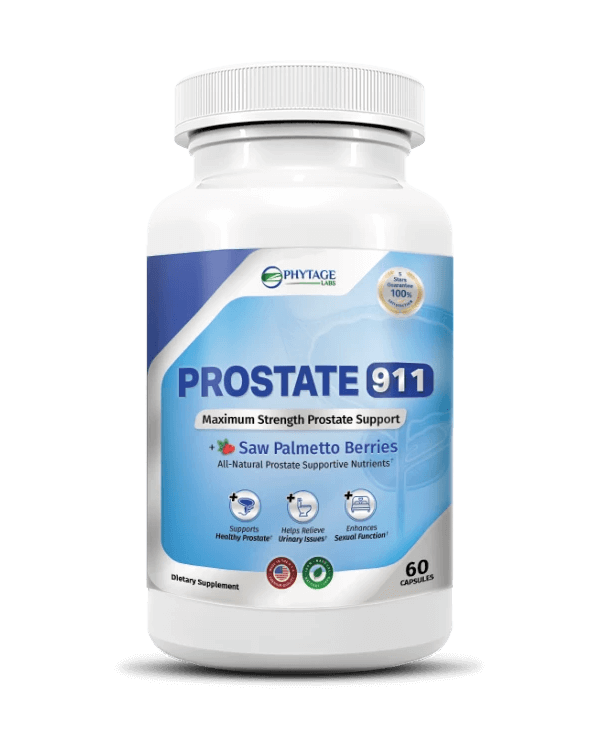
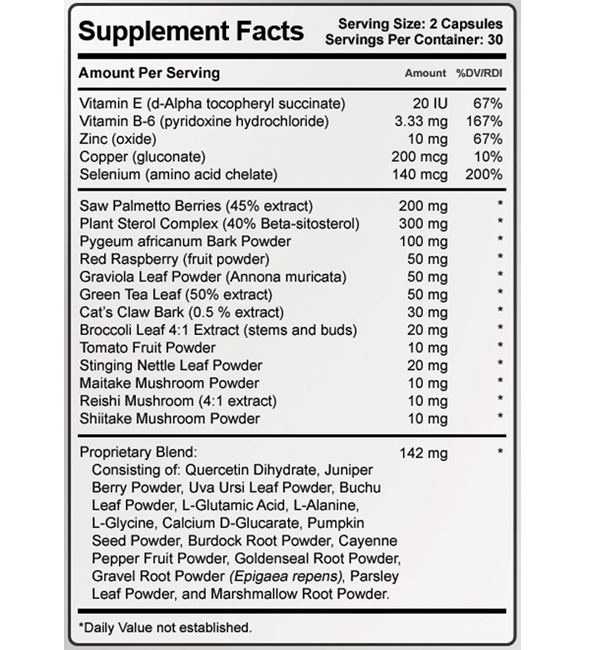
 All
All Cruelty
 Money-Back
  Made In
  Giving
 Non
Non All
All Cruelty
 Money-Back
  Made In
  Giving
 Non
Non
 Restores Prostate Health
 Improves Bladder Control
 Boosts Sexual Health
 Supports Urinary Health


 Pygeum
 Uva Ursi
 Pumpkin Seed
 Nettle Root








 1-800-822-5753

